

Clear Aligners and Periodontitis: Why Your Gums Should Be Checked First
If you have periodontitis, you can still wear clear aligners, but only after the disease has been treated and stabilised. Checks needed before starting.
If you have periodontitis, you can still wear clear aligners (invisible orthodontic trays), but only after the disease has been treated and stabilised.
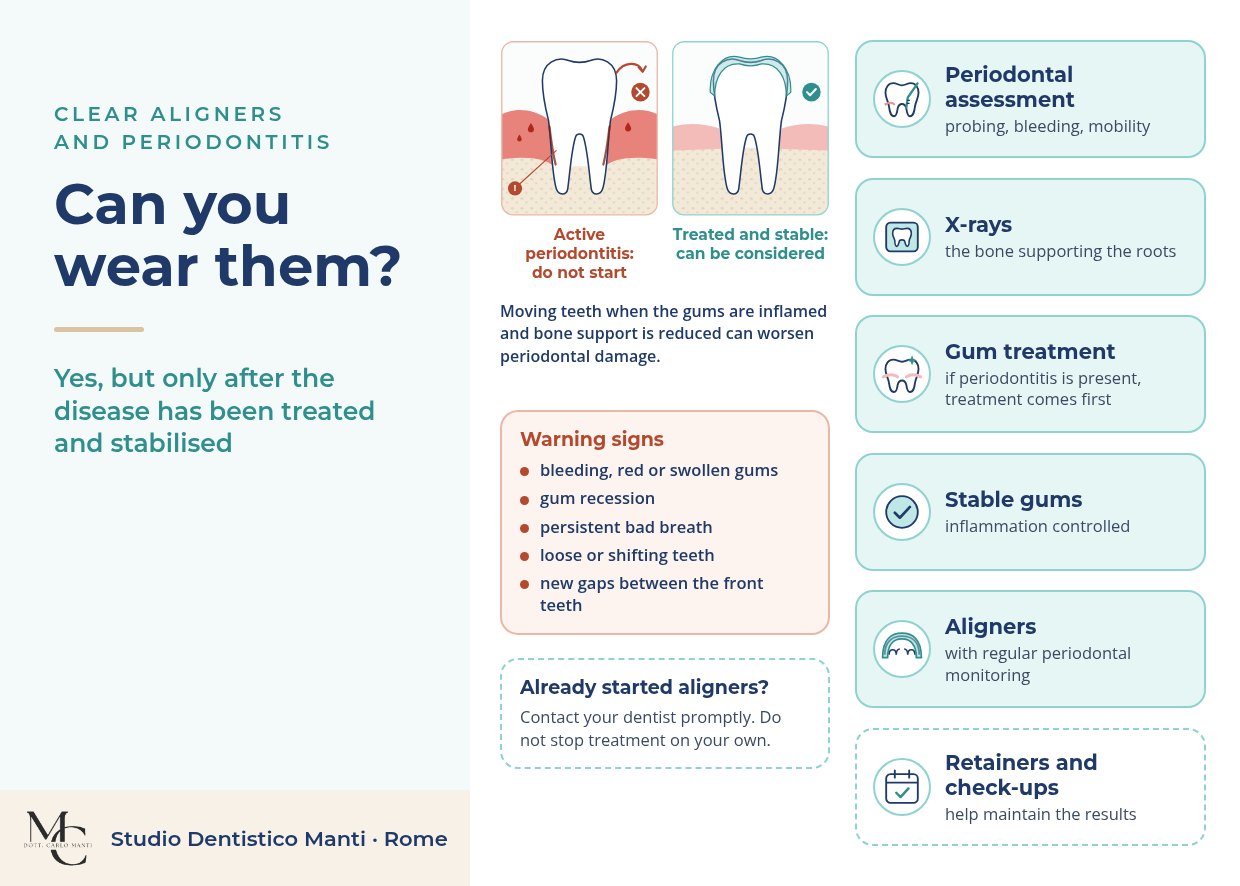
Moving teeth when the gums are inflamed and bone support is reduced can worsen periodontal damage. Healthy, stable gums are essential before starting orthodontic treatment.
Why Does Periodontitis Matter?
Periodontitis affects the tissues supporting the teeth: gums, periodontal ligament and bone.
It often develops without pain. Warning signs include:
- Bleeding, red or swollen gums.
- Gum recession.
- Persistent bad breath.
- Loose or shifting teeth.
- New gaps between the front teeth.
Tooth movement in adults can be a sign of periodontitis rather than simply an orthodontic problem. The underlying disease must be treated first.
What Checks Are Needed Before Starting?
A periodontal assessment should include:
- Periodontal probing: measuring gum pocket depths and bleeding.
- Tooth mobility assessment: checking the stability of each tooth.
- X-rays: evaluating the bone supporting the roots.
If periodontitis is present, treatment comes first. This may include professional cleaning, subgingival therapy and personalised oral hygiene instructions.
Aligners can be considered once periodontal inflammation is controlled and the gums are stable, following appropriate periodontal treatment guidelines (EFP).
Can You Wear Aligners After Periodontal Treatment?
Yes, in many cases.
Straightening teeth can improve alignment, make cleaning easier and help maintain natural teeth.
However, when bone support is reduced:
- Tooth movements must be carefully planned.
- Forces must be controlled.
- Treatment may need to progress more slowly.
- Regular periodontal monitoring is essential.
If inflammation returns, orthodontic movement may need to be paused until gum health is restored. Retainers and regular periodontal check-ups help maintain the results.
How Does Studio Dentistico Manti Approach Treatment?
At Studio Dentistico Manti, periodontal health is assessed during the first consultation for invisible orthodontics.
When necessary, gum treatment is planned before aligner therapy, following the approach described on our Periodontics page (available in Italian).
Frequently Asked Questions
I have periodontitis and have already started aligners. What should I do?
Contact your dentist promptly. Do not stop treatment on your own. A periodontal examination will establish whether the disease is active and whether orthodontic treatment should be temporarily paused.
Can aligners cause periodontitis?
No. However, inadequate cleaning of teeth and aligners can encourage plaque accumulation and gum inflammation. Good oral hygiene and regular check-ups are essential.
Can I straighten my teeth after the age of 50?
Yes. Age alone is not a limitation. The key factors are gum health and the amount of bone supporting your teeth.
Book Your Periodontal Assessment
Before starting clear aligner treatment, make sure your gums are healthy and stable.
Studio Dentistico Manti
Via Aristide Leonori 110, Rome
Telephone: +39 06 69 20 00 06
WhatsApp: +39 351 55 25 633
Studio Dentistico Manti
VAT no. 11580581004

